Want kombucha‑style sparkle but faster? Tepache is the happiest 2–5 day ferment: pineapple peels + sugar + water, then chill. With a 1‑gallon water‑seal jar and a fermentation weight, you can ferment hands‑off—no daily opening, no stirring—just strain when it tastes right.
If you want stronger, soda‑like fizz, add a quick secondary fermentation (bottle carbonation) after the first ferment.

Why Tepache Has Become So Popular
Tepache has exploded in popularity recently, and for good reason. This traditional Mexican fermented drink offers a unique combination of tangy, fruity, tropical flavors with natural carbonation—all while being incredibly easy to make at home.
What makes tepache special is its accessibility. Unlike many ferments that require weeks or months, tepache is ready in just 3-5 days. You don’t need special equipment beyond fermentation jar with weight, and the ingredients are simple: pineapple rinds (or whole pineapple), sugar, water, and optional spices like cinnamon or cloves.
The result is a refreshing, probiotic-rich beverage that’s naturally fizzy, slightly sweet, and perfect for hot weather. It’s also a great way to reduce food waste by using parts of the pineapple that are usually discarded.
How Fermentation Works In Tepache
Tepache fermentation is driven by wild yeasts and beneficial bacteria naturally present on the pineapple skin. These microorganisms are what make this drink possible.
Here’s what happens during fermentation:
- Wild yeasts feed on the sugars (from added sugar and natural pineapple sugars).
- They convert sugars into alcohol and carbon dioxide.
- Lactic acid bacteria (also naturally present) produce lactic acid, which gives tepache its characteristic tangy flavor.
- The carbon dioxide creates natural carbonation, making the drink fizzy.
The result is a lightly alcoholic (usually 0.5-2% ABV), probiotic-rich, naturally carbonated beverage with a complex, tangy-sweet flavor profile.
Note on carbonation: In the jar (primary), CO₂ is produced but most of it escapes. For noticeably fizzy tepache, you trap that CO₂ by doing a short secondary fermentation in sealed bottles.
Tepache Fermentation Workflow (1F → 2F → Chill)
Many beginners stop after the first ferment. That’s totally fine—tepache will be lightly sparkling. But for real carbonation, do the short bottle stage.
Stage 1 — Primary Fermentation (Jar)
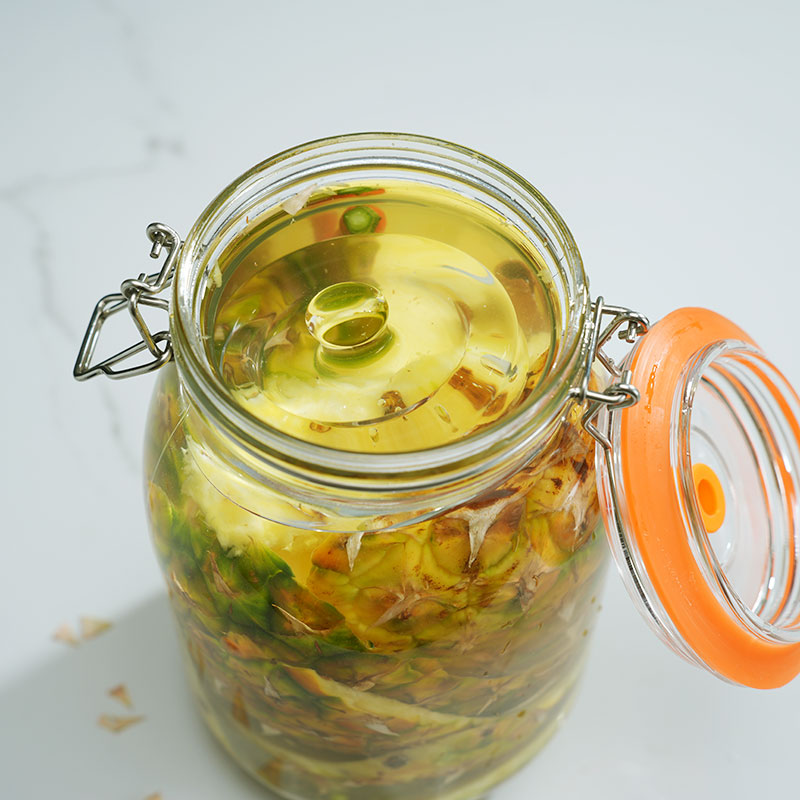
- Keep pineapple fully submerged under a fermentation weight.
- Leave 2 in / 5 cm headspace under the water seal so foam doesn’t push liquid into the airlock.
- Ferment until it tastes fruity + tangy and smells pleasantly yeasty:
- 20–25°C / 68–77°F: usually 3–5 days
- <20°C / 68°F: often 5–7+ days
- >25°C / 77°F: often 2–3 days
- No stirring needed (and with a weight you usually can’t stir). If you want, gently swirl the jar to even out sugars.
- Strain when it tastes right.
Stage 2 — Secondary Fermentation (Bottle Carbonation)
- Bottle the strained tepache in pressure‑safe bottles (swing‑top) or include one PET soda bottle as an easy pressure indicator.
- Leave 1–2 in / 2.5–5 cm headspace in each bottle.
- Keep at room temperature and check after 24 hours. Typical carbonation time is 1–3 days (warmer = faster, cooler = slower).
- Once carbonated to your liking, move bottles to the fridge before opening.
- Open cold, slowly, over a sink (secondary fermentation builds pressure).
Tepache Safety Basics
When making tepache at home, safety comes down to a few key principles:
- Proper ratios – Enough sugar feeds the beneficial yeasts, while not so much that it becomes overly alcoholic or attracts unwanted microbes.
- The single most important mold rule still applies: keep solids submerged. With a fermentation weight, you’ve already done the best thing.
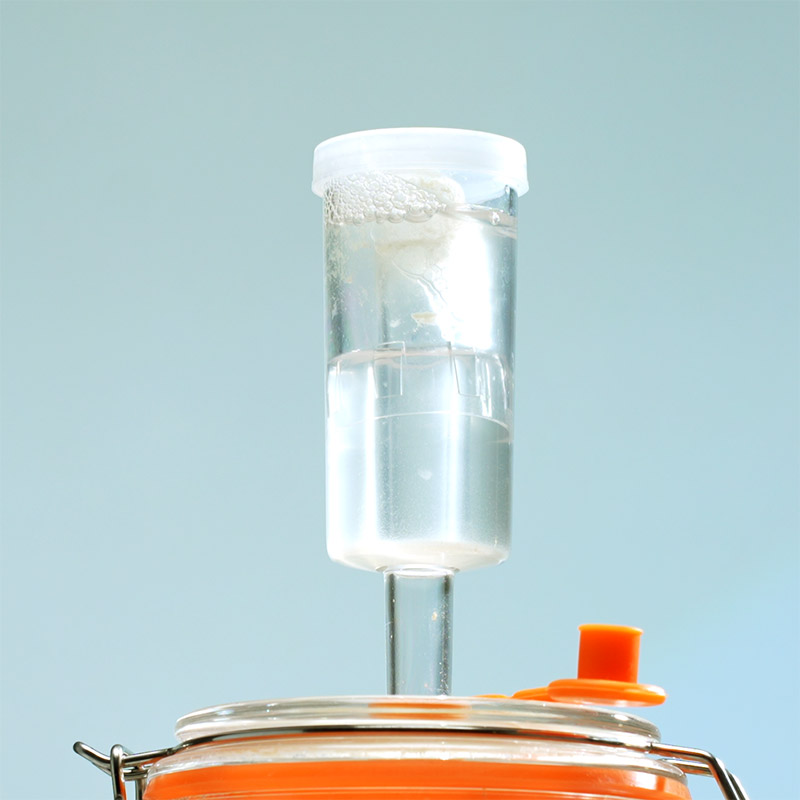
- Leave 2 in/5cm headspace under the water airlock to prevent liquid push-through and keep venting smooth.
- Watch for signs – Healthy tepache should smell fruity and slightly yeasty, with visible bubbles. If you see fuzzy mold, smell anything rotten, or notice slimy textures, discard it.
- Temperature & timing – For most home tepache, 20–25°C / 68–77°F usually finishes in 3–5 days. If it’s cooler than 20°C / 68°F, fermentation slows and often takes 5–7+ days. If it’s warmer than 25°C / 77°F, it speeds up and may finish in 2–3 days. Keep the pineapple fully submerged under the weight and leave headspace so CO₂ vents smoothly (warm rooms produce gas faster).
- Secondary fermentation pressure – Bottle carbonation builds pressure. Use pressure‑safe bottles (or a PET soda bottle indicator), leave headspace, and refrigerate once carbonated before opening.
Tepache (Fermented Pineapple Drink)
Equipment
- 1‑gallon (3.8 L) clip‑top water‑seal fermentation jar
- Fermentation weight
- Fine strainer
- (Optional) pressure‑rated bottles for carbonation
Ingredients
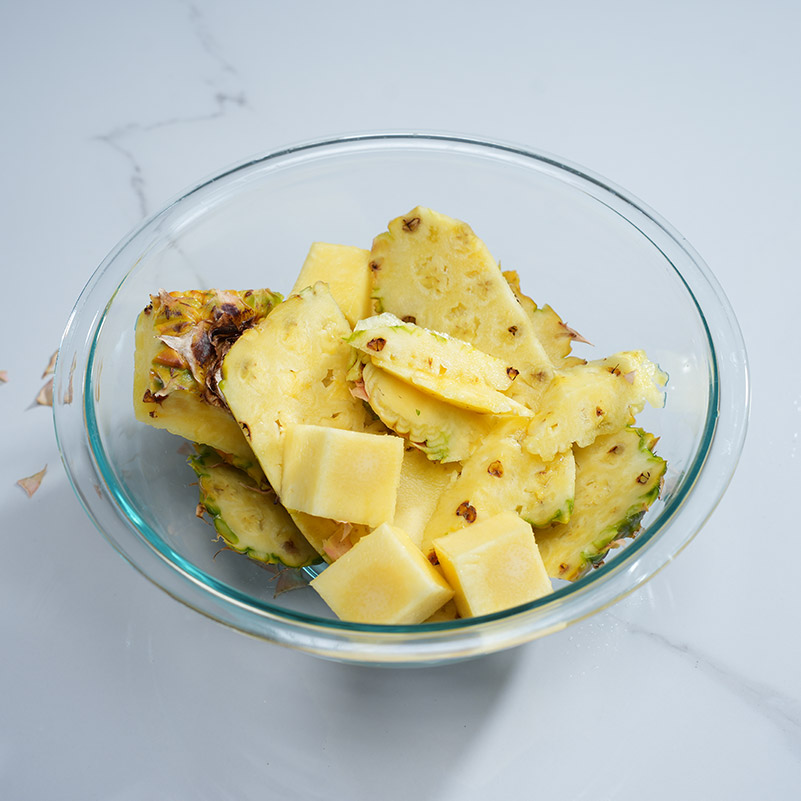
- Pineapple × 2 medium (about 2.6 kg total) — peels + cores used
- Filtered/dechlorinated water: add until the pineapple is just covered, leaving 5 cm (2 in) headspace below the lid.
- Dark brown sugar or piloncillo: 107 g per 1 L of water (≈ 1/2 cup per quart).
- Tip (no-stir): dissolve the sugar in a small amount of warm water first, cool, then pour in and top up with water to the fill line.
Instructions
Add peels + spices
Add pineapple peels/cores + cinnamon (and optional spices).Make sugar water
Dark brown sugar or piloncillo: 107 g per 1 L of water (≈ 1/2 cup per quart).Add sugar water until the pineapple is just covered, leaving 5 cm (2 in) of headspace below the lid.Weight + submerge
Place the fermentation weight so all peels stay under the liquid.Seal the water-seal airlock
- Ferment 3–5 days (no opening)
- Open once, taste, strain
Bottle for 2nd fermentation (carbonation) (1-3 days)
Transfer the strained tepache into pressure-safe bottles (swing-top bottles or a plastic soda bottles). Leave 3–5 cm of headspace.Refrigerate & store